This idea is directly from a video by Steve Mould (below) who got the idea from Brian Mackenwells (@mackenwells). I love sound visualizations and this is a cool way to directly translate sound waves into geometry. My videos came out much less clean than Steve’s. In person (and in the dark) the patterns are very crisp and interesting and I was even able to duplicate some of his patterns by playing his YouTube audio through my Bluetooth speaker. Unfortunately they were hard to capture on camera so I plan to re-record most of these but I’m glad I was able to try it out without too much messing around. I also found a way to connect my keyboard to the Bluetooth speaker and am looking forward to playing around with that.
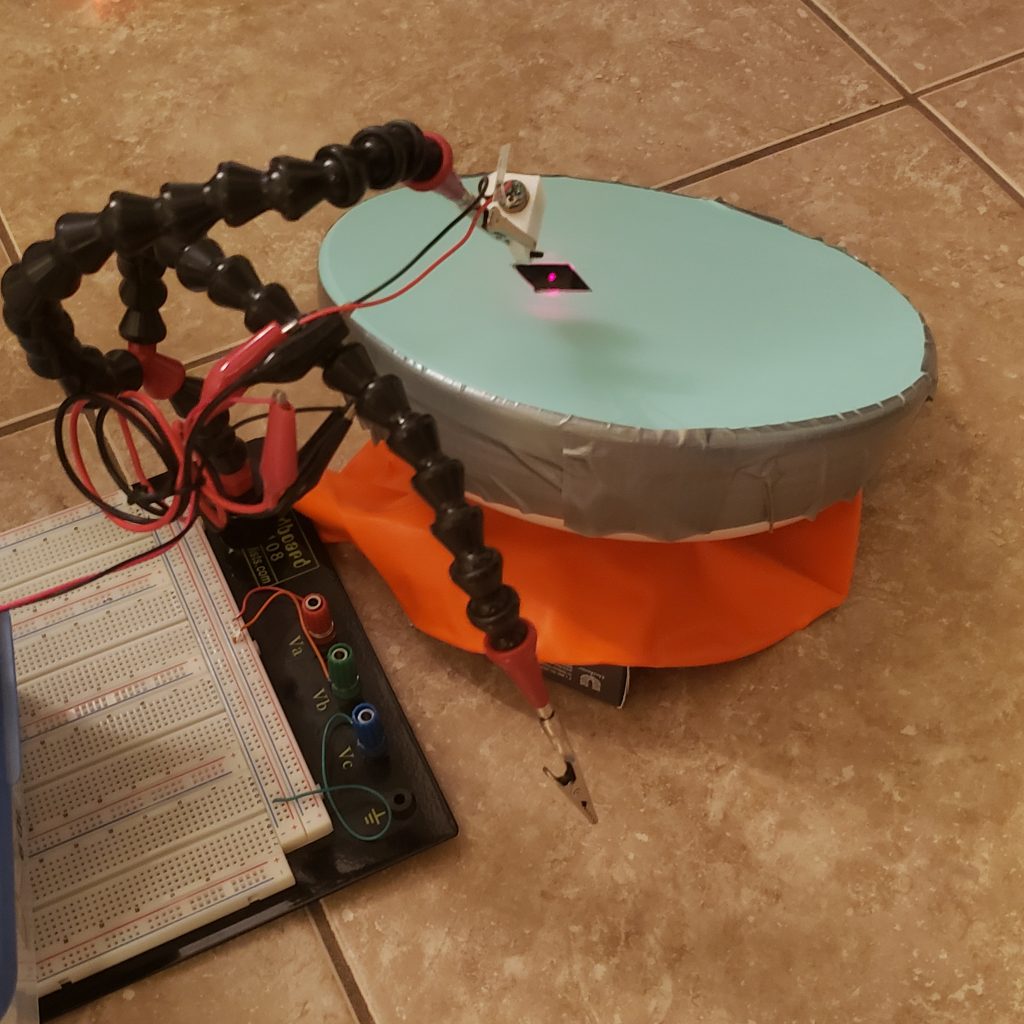
My version of the setup. Very crude (obviously).
Pattern my setup produced when using audio from Steve’s video (at about 6:45)
Comparing my patterns to Steve’s video
Song: “Pneuma” by Caterina Barbieri
Frequency sweep
Song: “When I Try, I’m Full (Buchla Music Easel – Live)” by Kaitlyn Aurelia Smith
Addressable LED strip projects were making the rounds on maker blogs a while ago and it got me wondering if you could make them react to music in interesting ways. Not surprisingly, someone had already done a similar project and I was able to borrow some concepts from their code.
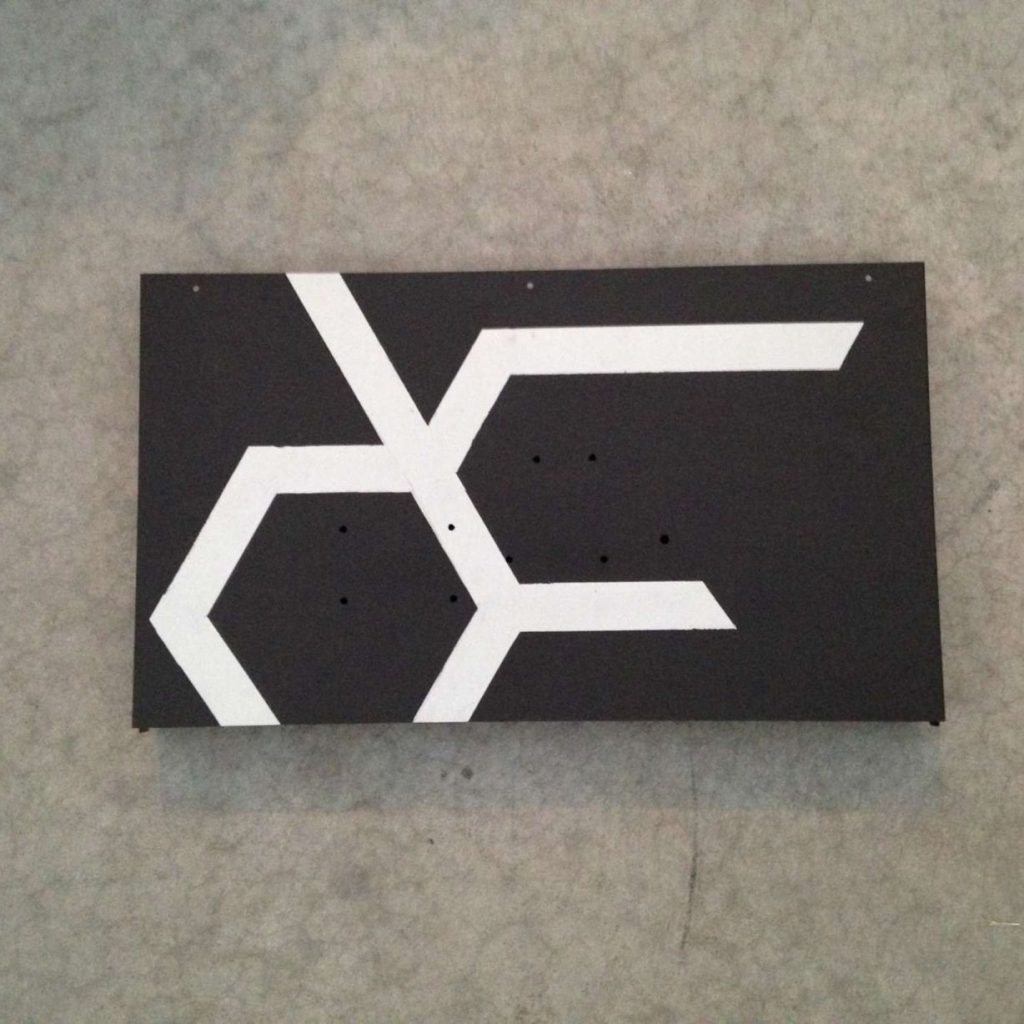
Backing board
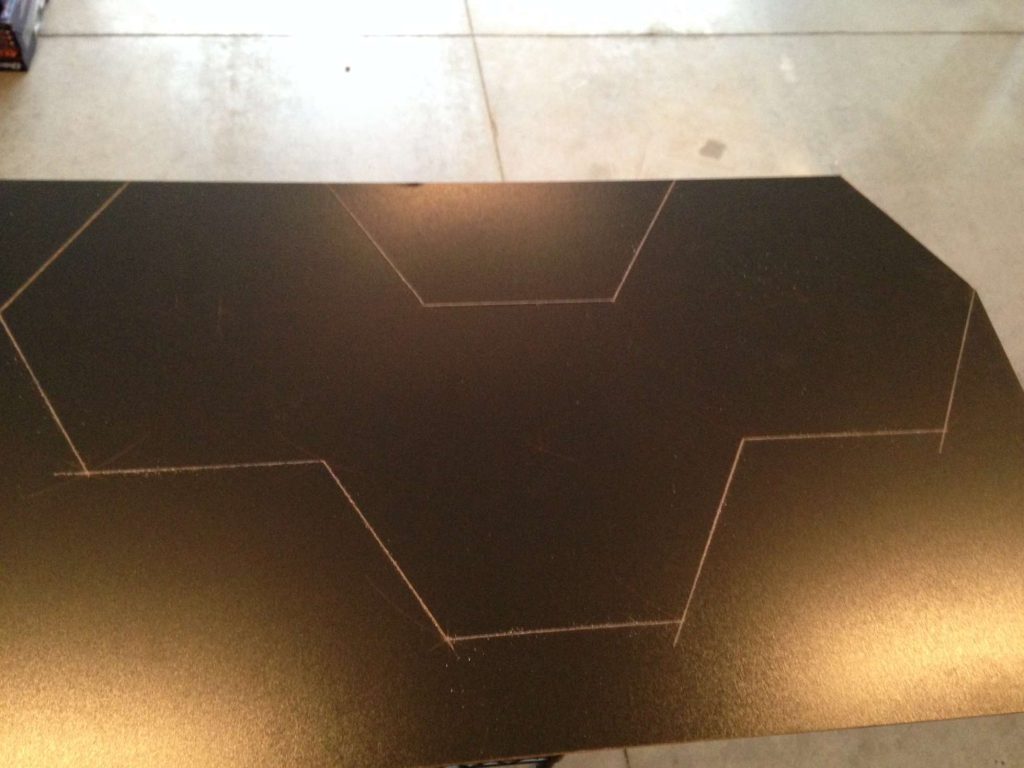
Cutting the shapes out of fiberboard. Did most of the geometry layout with a compass which was tricky but fun.
Frame
Electronics
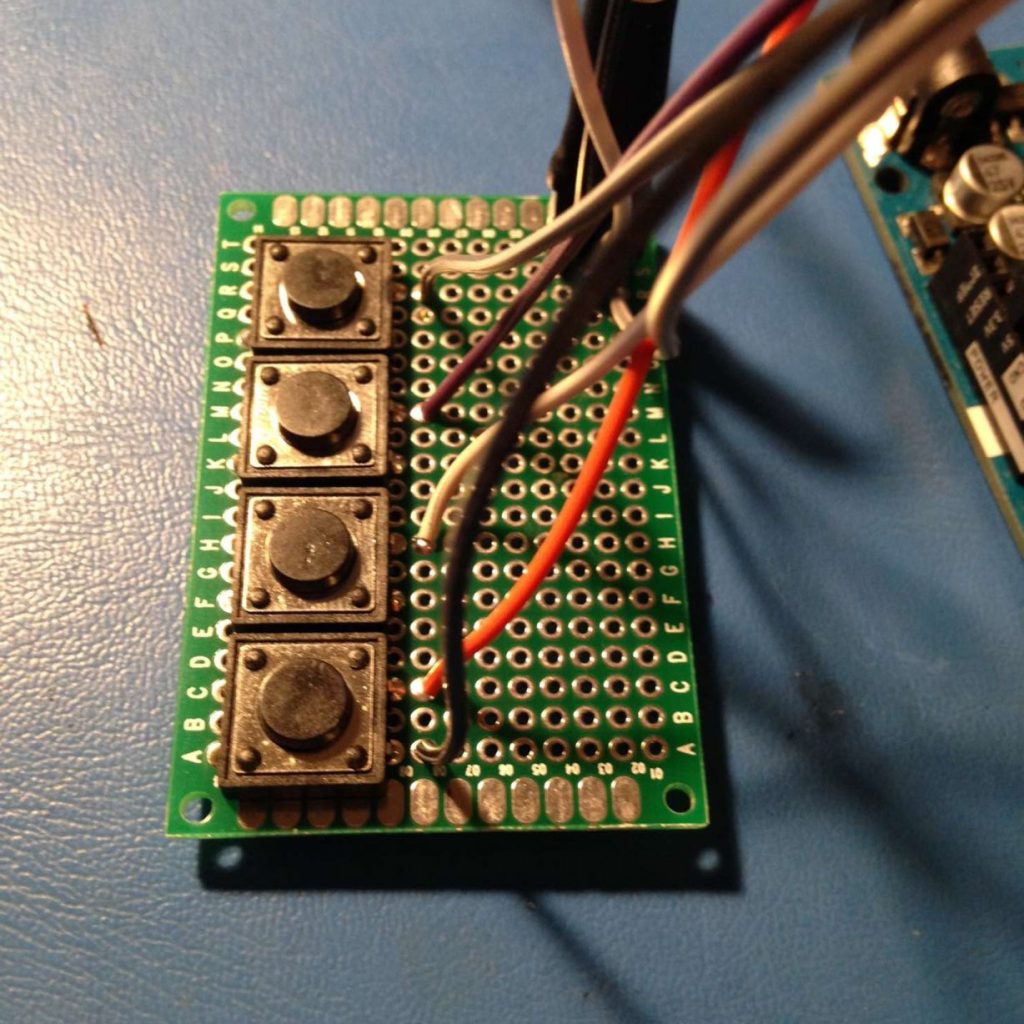
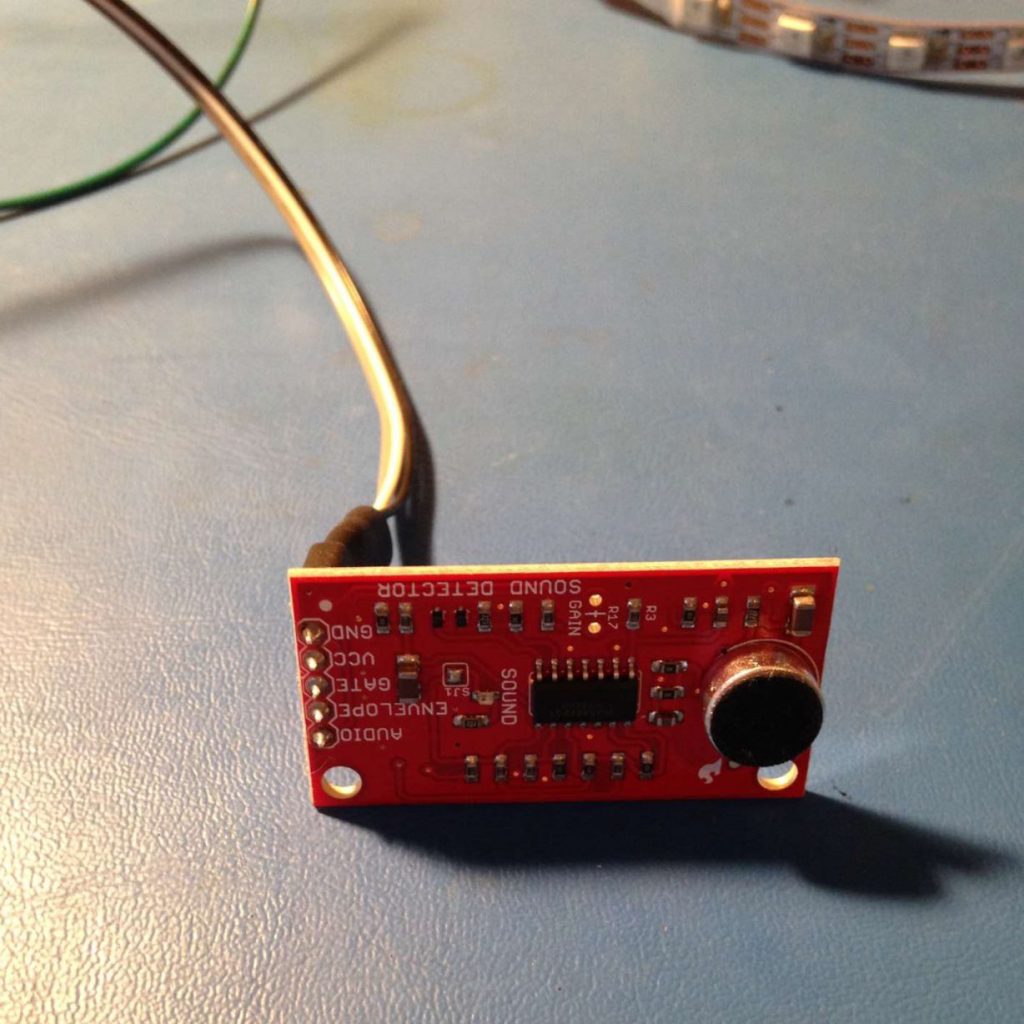
Buttons to select different modesSound collection breakout board
Control board for electronics, taken from the scrap metal bin. Sticking with the hexagon theme.
LEDs
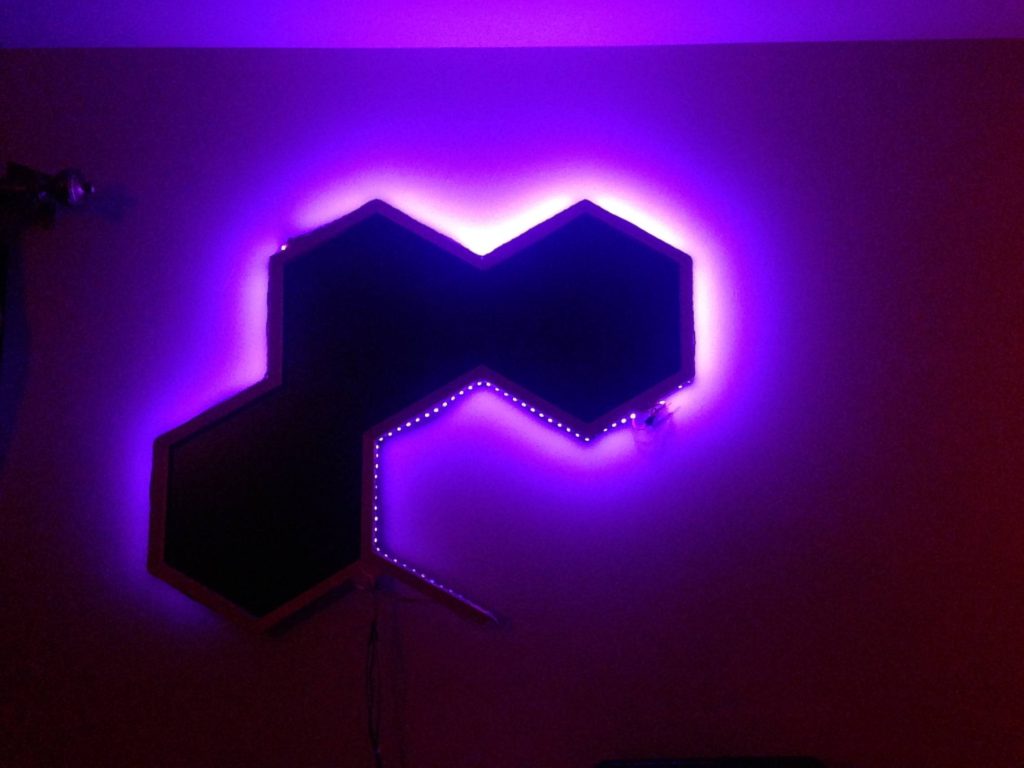
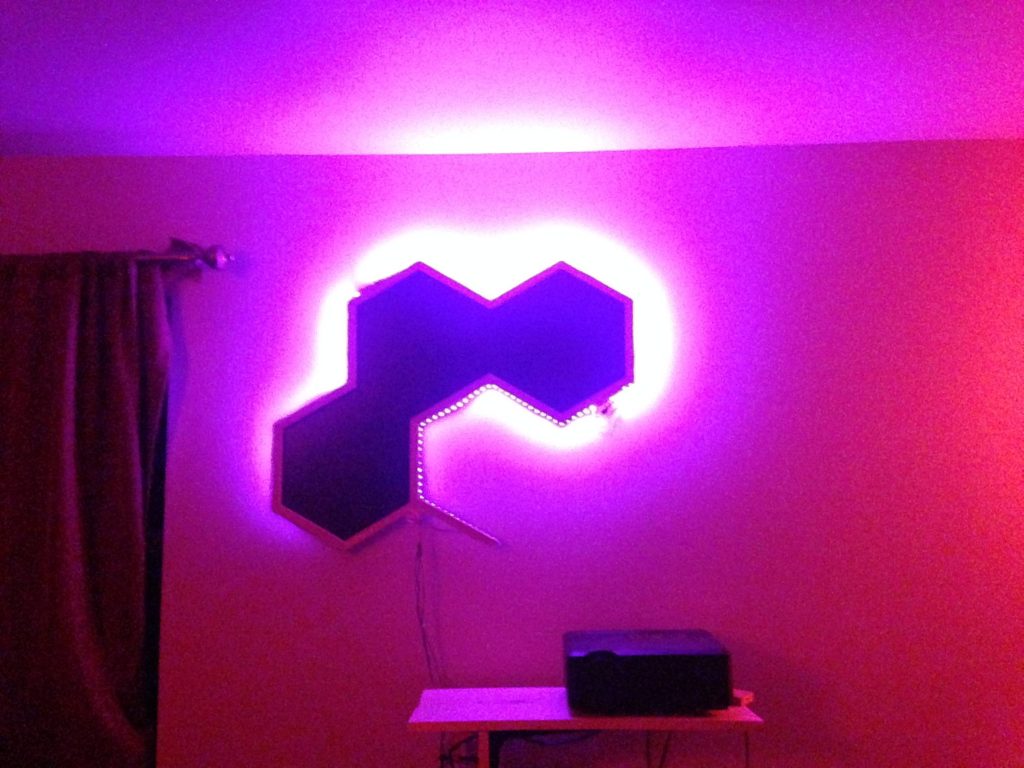
The wood frame was mostly to give it some depth and hide the junky edge of the fiberboard. It also allows you to route the LED strip without kinking it. Another bonus is that the LEDs reflect off the wall instead of shining at you directly – they’re way brighter than I anticipated.
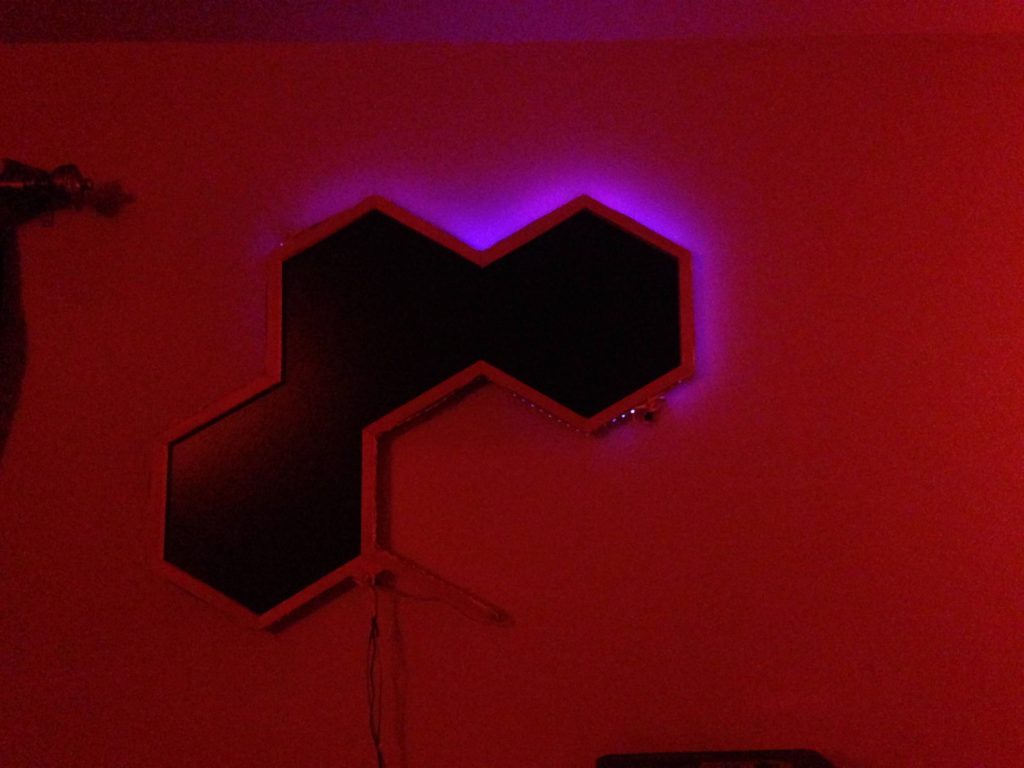
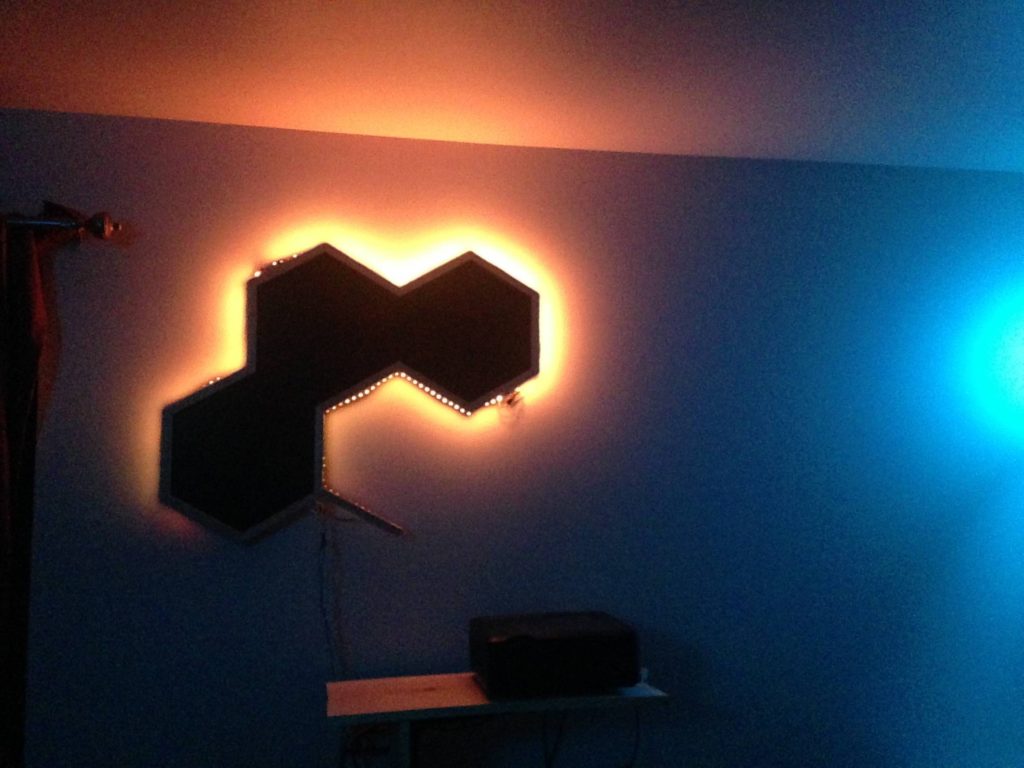
Up and running
I’m happy with the build overall but the sound processing could use some work. If I was writing it from scratch I’d probably try to implement better beat detection and have different brightness and colors for different frequencies and beats.
Even without the sound detection running it was fun programming different light sequences. I made a pretty convincing lightning simulator which involved some research into what makes lighting look like lightning. Anything periodic looks artificial and anything purely random doesn’t seem natural. You can also make cool rippling patterns which look like some kind of sea creature dazzle camouflage.