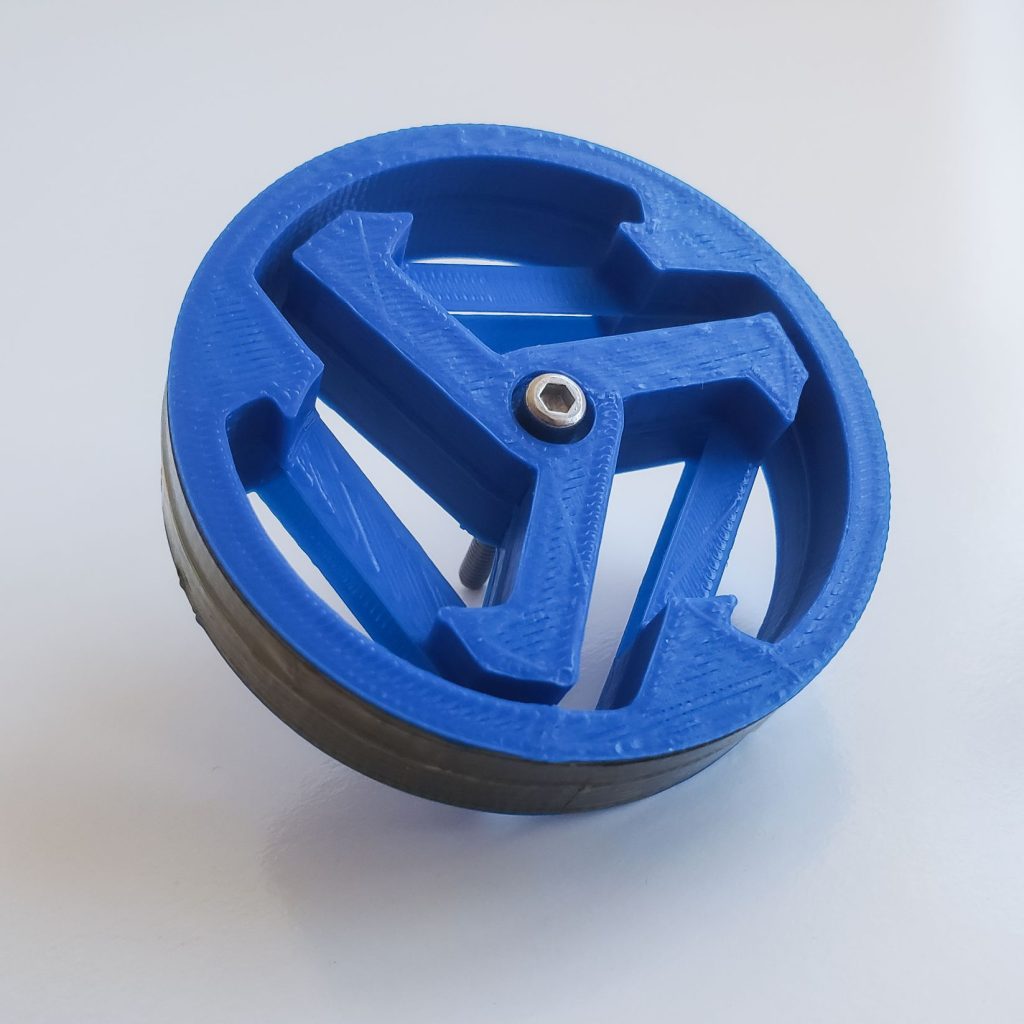
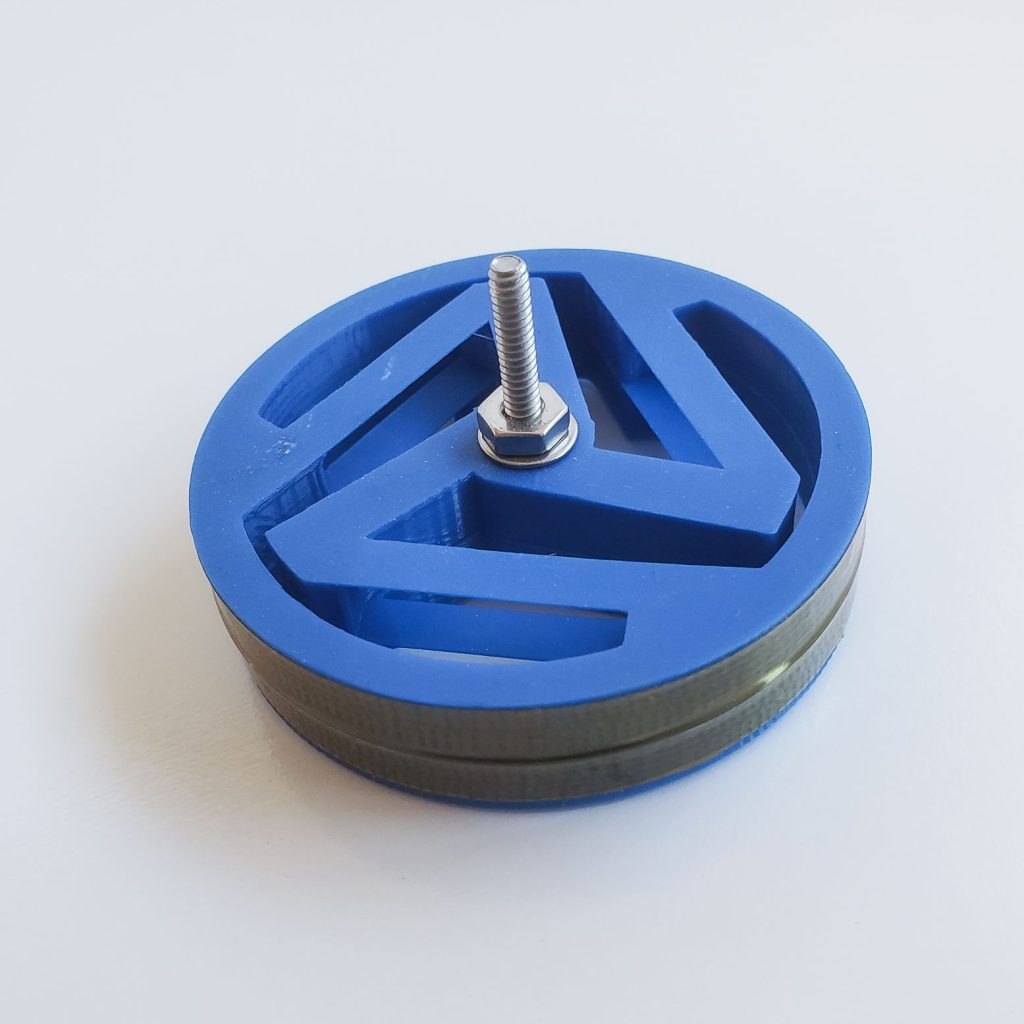
This first one is a flexure pivot, a type of flexure bearing (Wikipedia) that rotates smoothly about the cylinder axis with no friction. Because of parasitic errors the rotating part eventually makes contact with the stationary wall so this design has limited range of motion but it also has close to zero wear since no parts are sliding or rolling on other parts.

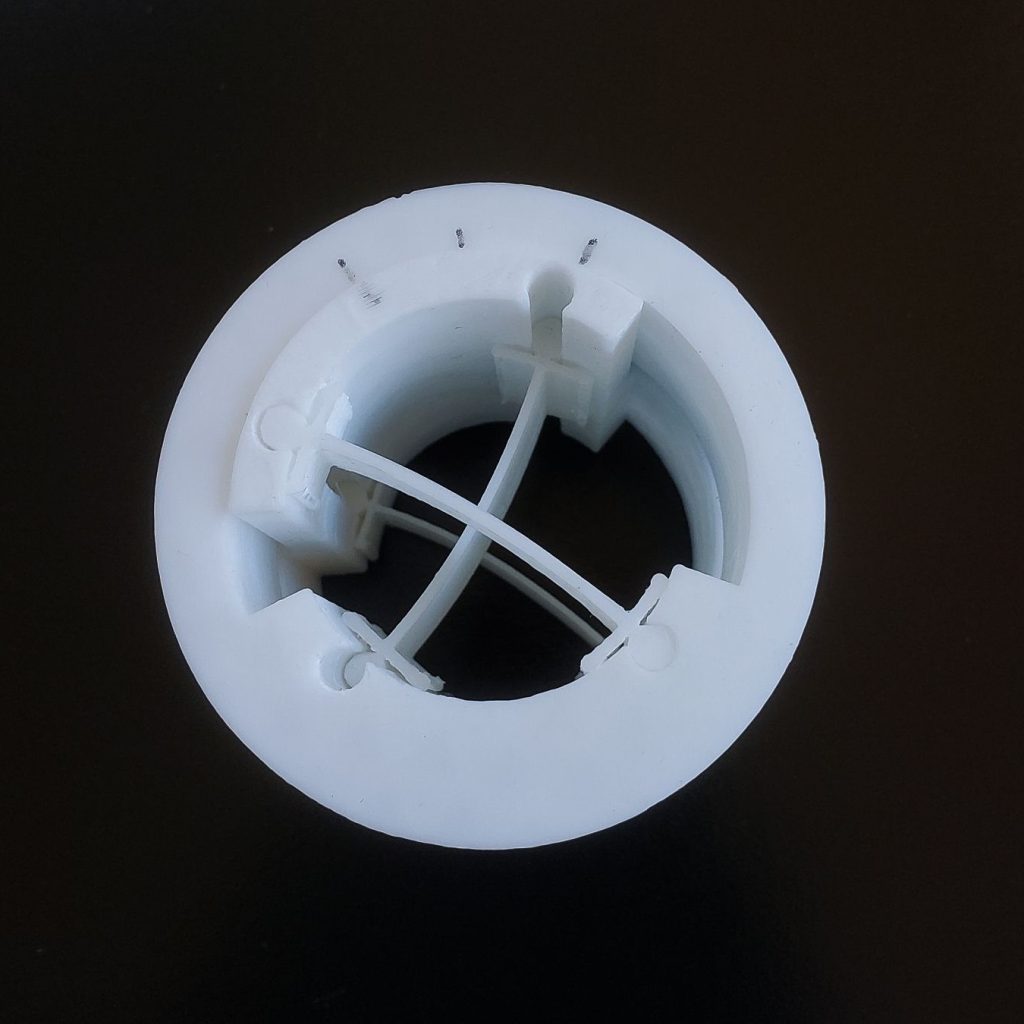
This next one is a diaphragm flexure. It uses three sets of parallel beam flexures to keep the mechanism stiff in all directions besides the one it’s moving in. However it does introduce some twist into the moving part (kind of a screw motion). They’re used in voice coils and other systems where you want no friction/stiction, long life and well defined movement. I had seen similar designs in fluid check valves and wondered how hard it would be to make one.